

Resource | Guide
Guide to Participatory, Community-Engaged Evaluation: Moving From Principles to Practice
- Authors:
- Kate Golden Guzman
- Michael Henson
- Ashley Bucher
- Elliott Graham
- Joelle Ruben
- Kris Neurauter
This guide introduces principles and practices for implementing participatory, community-engaged evaluation methods, along with key considerations for applying them in child welfare contexts.
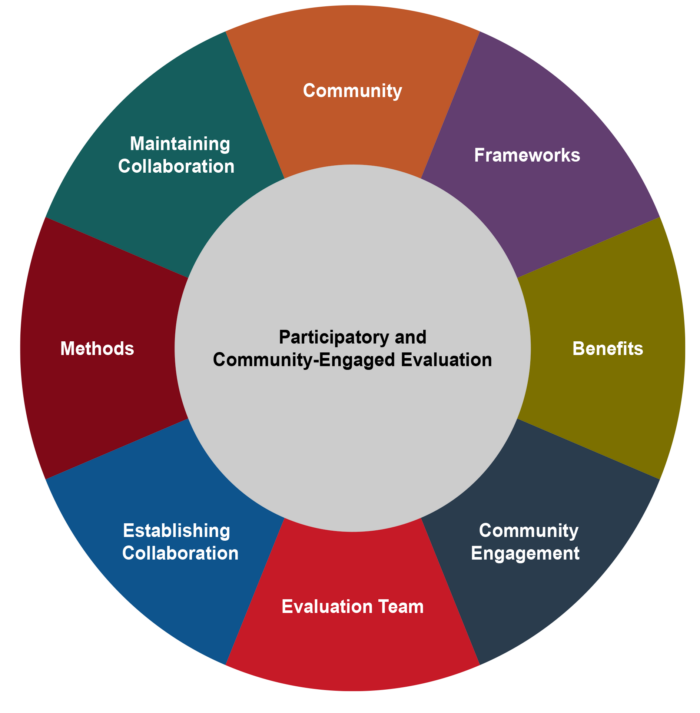 Information is organized across eight components:
- Community
- Frameworks
- Benefits
- Community engagement
- Evaluation team
- Establishing collaboration
- Methods
- Maintaining collaboration
Readers may select a component to learn more about related concepts, potential actions, conversation starters for evaluation teams and community members, references, and resource suggestions. This information can help evaluation teams foster intentional decision making and meaningfully engage program participants and other community members in evaluation.